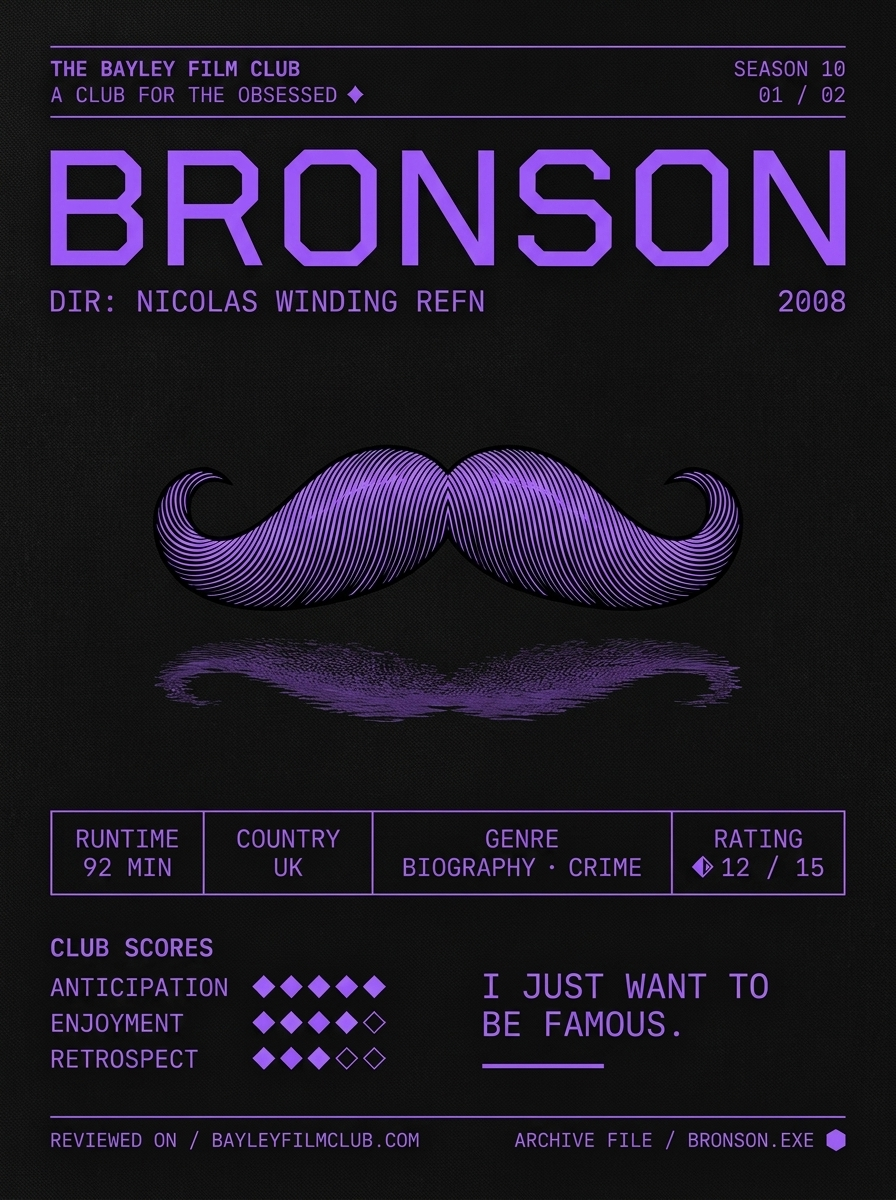
The neon provocateur. Nicolas Winding Refn is one of the most visually distinctive filmmakers working today — a director for whom image, sound, and atmosphere consistently take precedence over dialogue and conventional narrative. Working across Denmark, the UK, and the United States, he has built a body of work that divides audiences sharply and deliberately: his films are slow, intensely stylised, and loaded with symbolism that rewards patience and punishes distraction. Refn is drawn to figures who exist outside ordinary social structures — prisoners, criminals, enforcers, men defined entirely by their capacity for violence — and he treats them not with moral judgement but with a cool, almost anthropological fascination.
The best thing about Bronson is the story. Refn frames the whole enterprise not as a cautionary tale, not as a character study in the conventional sense, but as something closer to a performance piece about a man who chose madness as his medium.
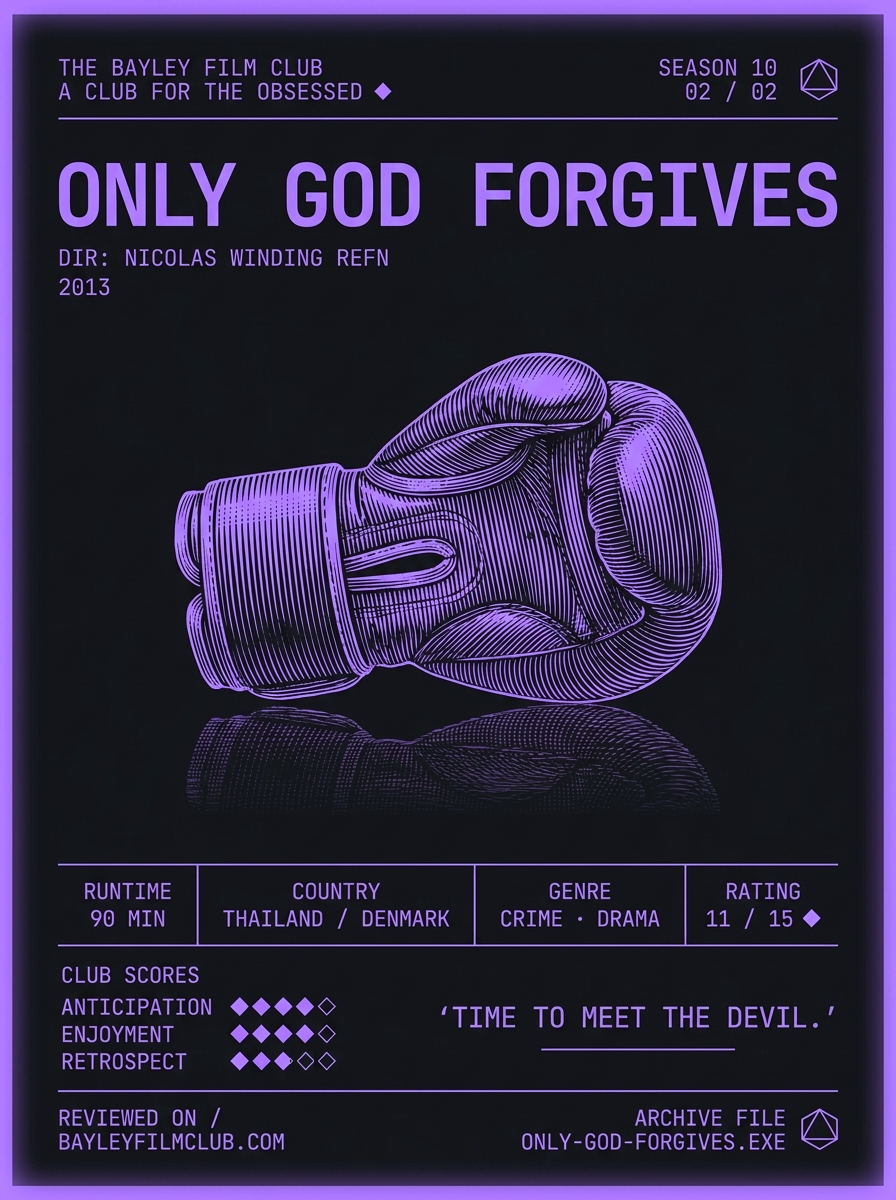
The film is very artistic and full of symbolism. Beautiful scene settings and transitions with sound and light effects make a strong impression. Sound and light seem to play a more critical role than the characters or the script itself.