Taking Life by the Horns
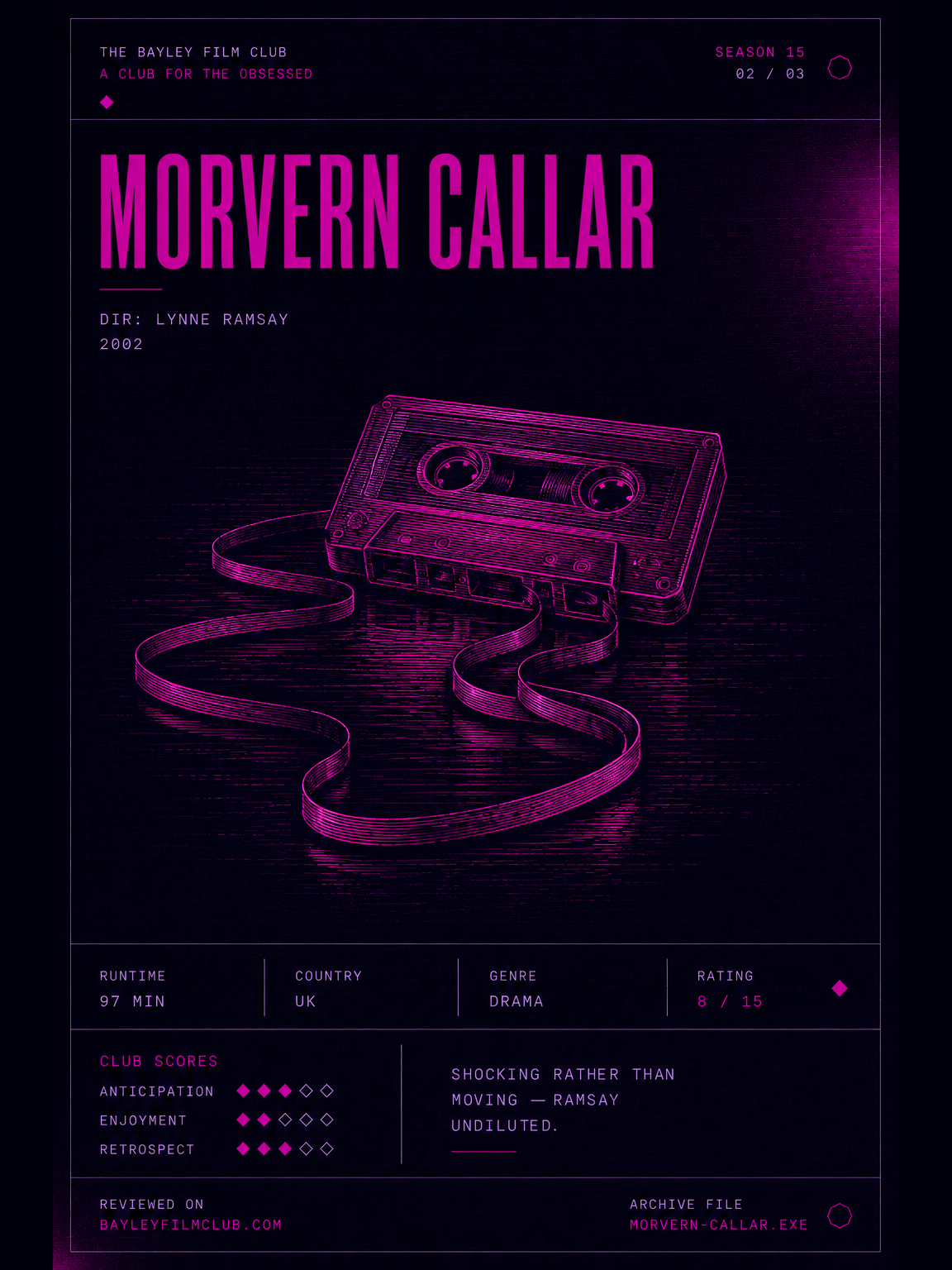
Morvern Callar is the mysterious title of Lynne Ramsay's second film, released in 2002 — and it is also a name. It belongs to a young woman whose story we follow for the length of the film. We meet her lying on the floor, next to her boyfriend's body, touching him softly. The blood from his cut wrist is smeared across the kitchen floor. He lies barefoot, in black jeans, in the passage between the kitchen and the main room. A string of Christmas lights buzzes and flashes in the background, which is how we know what time of year it is.
In the days that follow, we accompany Morvern, who seems to be still in shock, through her ordinary day-to-day life. She does not report her boyfriend's death. She does not tell anyone about his suicide. She does not move his body. At first, I read this as grief and denial doing what grief and denial do. As the story progressed, though, I started to think that Morvern was — to use the technical term we've all agreed on in highly evolved societies — a bit of a nutcase.
She has not reported the death of her boyfriend. She has not told anyone about his suicide. She has not moved his body.
Taking advantage of her boyfriend's death — his laptop holds an unpublished manuscript, and a modest sum of money — she makes impulsive, oddly soulless decisions. Together with her friend Lanna, she goes on a trip to Spain. Taking life by the horns, you might say, if the horns in question belonged to someone else's tragedy.
I have mixed feelings about Morvern Callar. The picture is shocking, and honestly — if that is all you're after, you will probably get on with it fine. I was looking for more than that. I also found it boring in stretches, which surprised me. I suppose I was expecting something more from Ramsay, coming off Ratcatcher.
If shock is all you seek, you'll probably like it. I myself was looking for more than that.
As an Amazon Associate I earn from qualifying purchases.