Is Someone Who Lets Abuse Happen Equally Guilty?
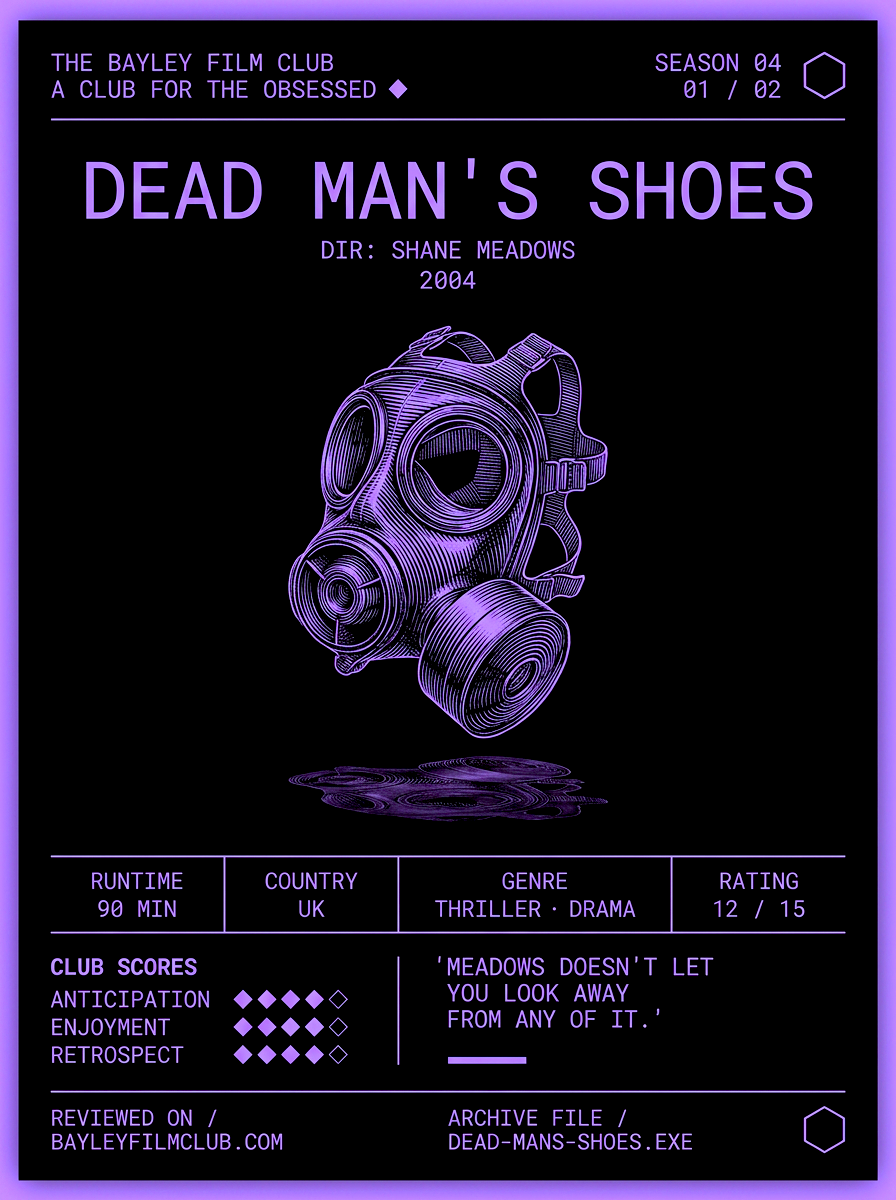
Dead Man's Shoes is a film that sticks to what Meadows knows — small towns, working-class lives, and the violence that emerges when people are left without consequence. It follows the personal vendetta of Richard (Paddy Considine) against a group of men in a small Midlands town near the Peak District.
Richard is accompanied in most scenes by his brother Anthony (Toby Kebbell) — though in fact he is only imagining his presence. It can be concluded quickly that Anthony is dead. His full story is not revealed until the very end, but it is clear early on that men from the town had a part in his fate. Richard is hunting them down one by one and delivering justice in his own terms.
It emerges that Richard had left for the army, leaving Anthony alone. Retrospective scenes show how the boy was used and taken advantage of by an older group of men — drugs and alcohol forced into him, constantly bullied and humiliated. Anthony, being mentally disabled, wasn't capable of fully understanding what was happening or standing up for himself. These flashback sequences are more uncomfortable to watch than the scenes of Richard executing the men involved — which is exactly Meadows' point.
The pictures of bullying are more uncomfortable to watch than the scenes of Richard's justice. Meadows knows what he is doing with that contrast.
Finally, only one man is left — Mark. Unlike the others, he has moved on: started a family in a nearby village, while the rest of the gang remained the same pathetic small-town drug dealers without imagination, guilt, or reflection of any kind. When Mark realises Richard is looking for him, he tells his wife the story of what happened to Anthony. Richard's actions throughout have been strictly planned and strategic, including the finale. Mark is the only one feeling genuine guilt — not for what he did, but for what he failed to stop. And because of that distinction, his family suffers no consequences. Only he does.
This last chapter forces one more question: is someone who allows abuse to happen equally guilty? It is one of the most honest questions the film poses — and it doesn't answer it cleanly, because there is no clean answer.
Through Mark, Richard finally finds closure for his own guilt — the guilt of leaving, of being embarrassed by his disabled brother, of failing to protect him.
What I take from Dead Man's Shoes is a reflection on how we treat other people — how often we don't think about the implications of our actions, especially in the psychological sphere. Mental health is still taboo in many parts of the world. Taking responsibility for our own actions is difficult enough. Taking responsibility for the consequences of our behaviour on others is another matter entirely. We have had laws regarding murder since the rise of civilisation. The impact of psychological abuse leading to suicide is a different story — and an unfinished one.
How cruel humans can be to one another is sometimes shocking. And yet people are creative in all aspects of life — innovation, technology, art, music, but also in torture, and in the ways of hurting others, both physically and mentally. Meadows doesn't let you look away from any of it.
As an Amazon Associate I earn from qualifying purchases.